
“What is she like?” It’s one of the first genuinely useful questions your students learn to ask — and one of the hardest to answer with a vocabulary of ten words. Describing people comes up everywhere: speaking exams, job interviews, small talk, storytelling, even gossip (let’s be honest, especially gossip 😄).
In this article you’ll find 150+ adjectives to describe a person — positive and negative character traits, appearance vocabulary, and mood words — sorted by CEFR level, so whenever your students need words to describe someone, you can pick the right ones for the right group. And because a word list alone never made anyone fluent, we’ve added ready-to-use classroom activities and free worksheets at the end.
Positive adjectives to describe a person
Start here with lower levels — positive words are the first describing words for a person that students reach for when talking about friends and family.
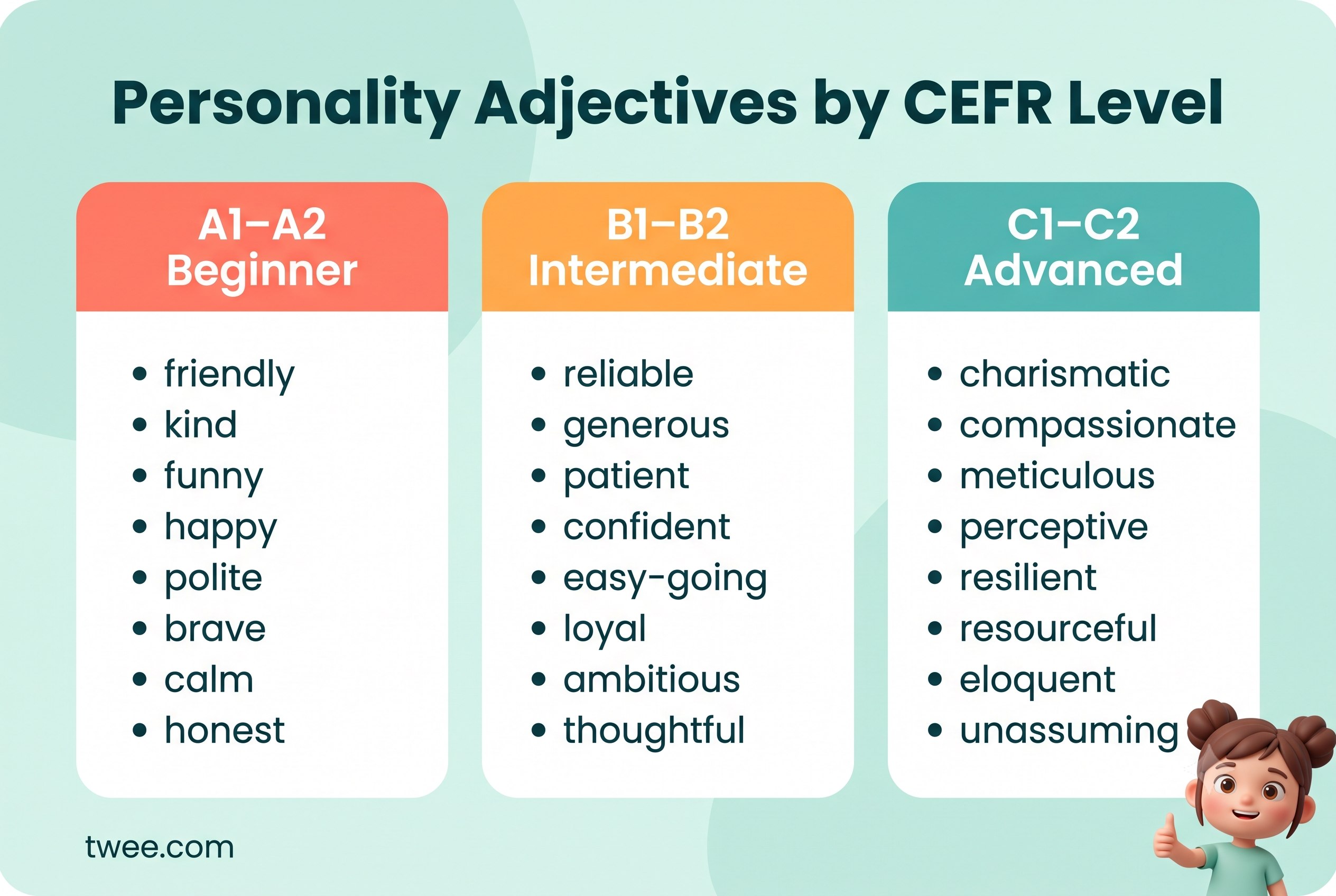
A1–A2 (beginner to elementary):
- friendly, kind, nice, funny, happy, polite
- smart, clever, strong, brave, calm, quiet
- busy, careful, fair, gentle, helpful, honest
- lucky, young
B1–B2 (intermediate):
- reliable, generous, patient, confident, creative, cheerful
- hard-working, easy-going, open-minded, sociable, sensible, loyal
- ambitious, curious, energetic, enthusiastic, supportive, thoughtful
- talented, mature, modest, optimistic, responsible, sincere
- adventurous, affectionate, considerate, determined, flexible, imaginative
C1–C2 (advanced):
- charismatic (naturally charming and inspiring), compassionate (deeply caring about others’ suffering), conscientious (careful and principled about doing things well)
- diplomatic (tactful with people and situations), meticulous (extremely precise), perceptive (quick to notice and understand)
- resilient (quick to recover from setbacks), resourceful (good at finding solutions), altruistic (selflessly helpful)
- eloquent (expressing ideas beautifully), magnanimous (generous in forgiving), unassuming (modest, not attention-seeking)
Negative adjectives to describe a person
Students need these too — but this is also the perfect place to teach softening language. “He’s a bit stubborn” lands very differently from “He’s stubborn”, and that nuance is a lesson in itself.
A2–B1:
- lazy, rude, boring, selfish, noisy, messy
- angry, unfriendly, impatient, careless, dishonest, unkind
- shy (neutral-to-negative depending on context), nervous, bossy, stubborn
- greedy, mean, childish, aggressive, grumpy, jealous
B2–C2:
- arrogant (thinking you’re better than others), moody (emotions change quickly), unreliable (can’t be depended on)
- gullible (believes anything), stingy (hates spending money), vain (obsessed with own appearance)
- condescending (talking down to people), manipulative (controlling people for own benefit), narrow-minded (unwilling to accept other views)
- obnoxious (extremely unpleasant), pretentious (trying to seem more important than one is), ruthless (without pity)
Adjectives to describe appearance
A1–A2:
- tall, short, young, old, pretty, handsome
- thin, slim, strong, cute, clean, neat
B1 and up:
- attractive, good-looking, elegant, stylish, scruffy, well-dressed
- muscular, skinny, plump, petite, middle-aged, elderly
- bald, tanned, pale, freckled, athletic, curvy
- striking (unusually attractive), immaculate (perfectly clean and tidy), dishevelled (messy in appearance)
💡 A cultural note worth raising with higher levels: in English, commenting on appearance is often avoided in professional contexts — another great mini-discussion for your class.
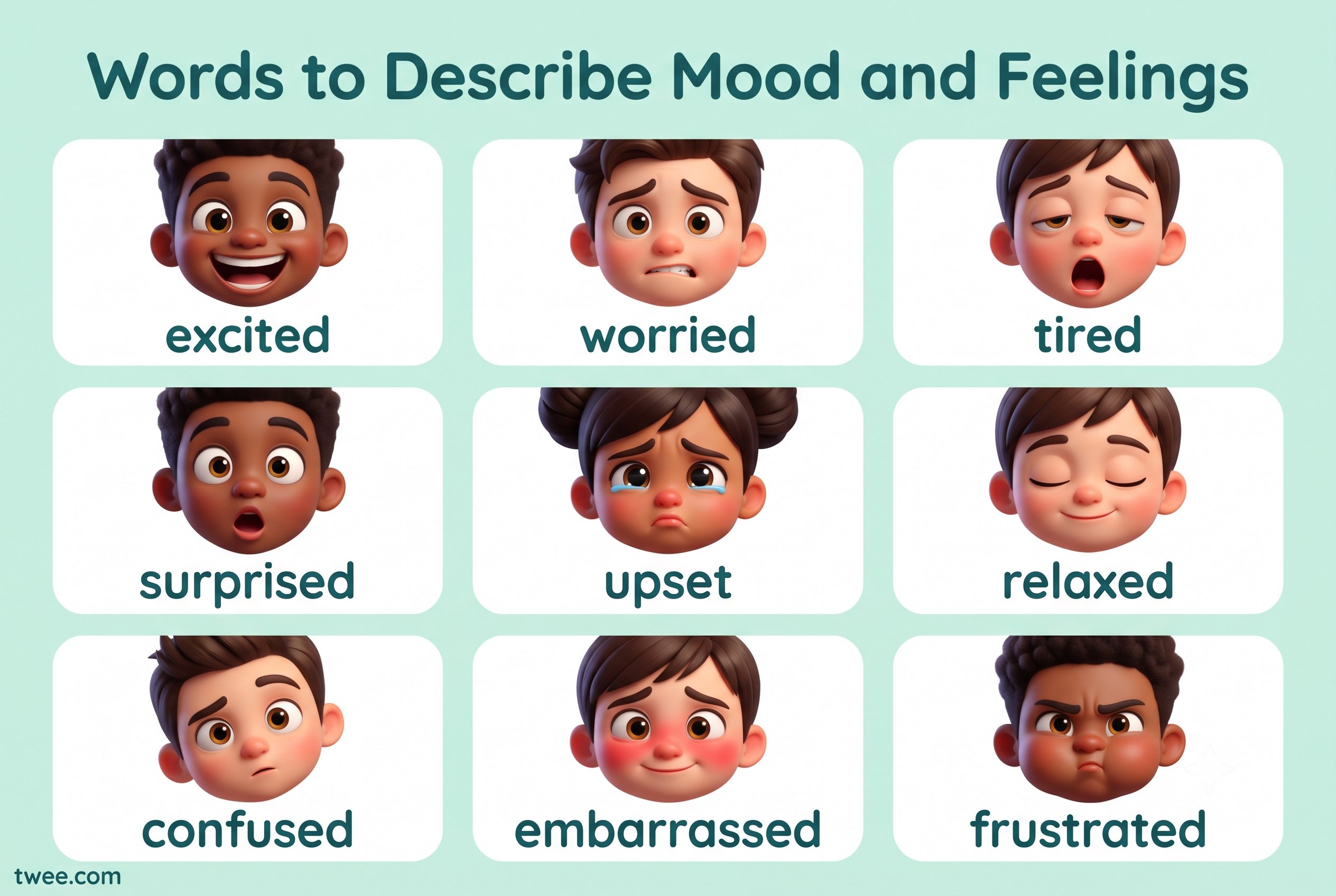
Mood words: adjectives to describe feelings and emotions
Personality is permanent; mood is temporary. “She’s grumpy” vs. “She’s being grumpy today” is a distinction that unlocks a lot of natural English.
- excited, worried, tired, bored, surprised, upset
- relaxed, annoyed, confused, disappointed, embarrassed, frustrated
- scared, lonely, proud, grateful, hopeful, peaceful
- overwhelmed (feeling it’s all too much), indifferent (not caring either way), ecstatic (extremely happy), furious (extremely angry)
- anxious, content, gloomy, irritable, restless, uneasy
5 classroom activities for teaching personality adjectives
1. Match words to definitions — in seconds. Paste any list from this article into Twee’s Word–Definition Matching tool and you’ll get a ready matching exercise tailored to your students’ level. Perfect as a warm-up or vocabulary check.
2. Guess who. Each student secretly picks a classmate, celebrity, or character from your course book and describes them with exactly five adjectives — the class guesses. To pre-teach, generate example sentences with the Sentences with Vocabulary tool so students see each adjective in context first.
3. Personality dialogues. Use the Dialogue Creator to generate a conversation between two very different characters — say, a chatty optimist and a grumpy pessimist. Students read it, underline the adjectives that fit each speaker, then perform it with the personalities swapped.
4. Celebrity gap-fill. Create a short text about a person your students actually care about with Text with Custom Vocabulary (feed it your target adjectives), then turn it into a gap-fill with the Fill in the Gap tool. Two minutes of prep, a whole activity done.
5. Soften it. Write five blunt sentences on the board (“He’s rude.”) and have students soften them (“He can be a little direct sometimes.”). Great for B2+ groups working on diplomacy and register.
Free worksheets and lesson plans to go with this list
Want something printable for tomorrow’s class? These are free to download:
- Describing appearance worksheet (A2)
- Feelings in English worksheet (A2)
- Exploring your true self worksheet (A2)
And if you’d rather have a full lesson built around the topic, check out our ready-made Personality lesson plan and Express Yourself: Feelings in English.
Or skip the copying and pasting entirely — put your own word list into Twee and generate matching, gap-fill, and speaking activities for your exact students in a couple of minutes.
