Case 1: Negative with is (to be)
Use is not or the short form isn't to say something is not true now.
He isn't at school today.
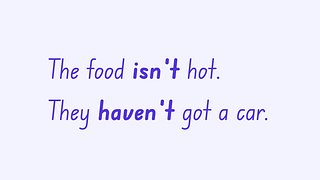
The food isn't hot.
Case 2: Negative with have (present perfect)
Use have not or haven't to say something has not happened or someone does not have something.
I haven't finished my homework.
They haven't got a car.
Case 3: Negative with do (present simple)
Use do not or don't to say someone does not do something regularly or now.
She doesn't like coffee.
We don't play football on Mondays.
Case 4: Negative with can (ability or permission)
Use cannot or can't to say someone is not able to do something or is not allowed.
I can't swim well.
You can't use your phone in class.
Pay Attention:
Sometimes people use the short form isn't, haven't, don't, can't. This is very common in speaking and writing.
She isn't here now.
We haven't seen that film.
He doesn't eat meat.
I can't open the door.
Additional Notes
Remember, with do not / don't, the main verb is in the base form (without -s or -ed).
He doesn't like pizza. (not doesn't likes)
With have not / haven't in the present perfect, use the past participle (the third form of the verb):
They haven't finished the test.
With can not / can't, the main verb is always in the base form:
She can't drive.