Present Simple: Be vs Do (Affirmative & Negative)
ESL Grammar WorksheetsPresent Simple: Be vs Do (Affirmative & Negative)

Present Simple: Be vs Do (Affirmative & Negative)

Build confidence in A1 English grammar with this Present Simple worksheet on “be” vs “do” in affirmative and negative sentences. Designed for teens and adults, it clearly explains rules, common mistakes, and key differences. Includes sentence completion, error correction, rewriting tasks, and writing practice. Ideal for ESL learners to improve accuracy and fluency in everyday English. Perfect for classroom lessons, homework, or self-study.

Online Interactive
Based on CEFR
Fully Customizable
1

Study this grammar rule.

Present Simple: Be vs Do

1. The verb be (am / is / are)

Use be to talk about:

  1. who you are
  2. how you feel
  3. where you are

Examples:

I am a student.

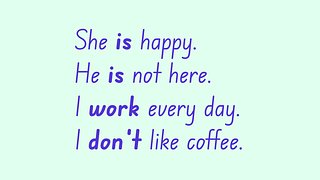
She is happy.

They are at home.

Negative:

Add not after be.

I am not tired.

He is not here.

We are not late.


2. Action verbs (like, work, play, live)

Use action verbs for things you do.

Examples:

I work every day.

She plays tennis.

They live in London.

Negative:

Use do not (don’t) or does not (doesn’t)

  1. I / you / we / they → don’t
  2. he / she / it → doesn’t

Examples:

I don’t like coffee.

She doesn’t work on Sundays.


3. Quick tip

  1. Use be + notI am not happy.
  2. Use don’t / doesn’t + verbI don’t work on Sundays.
2

Choose the correct options to complete the sentences.

3

Complete the sentences with the correct form.

4

Rewrite the sentences in the negative.

5

Find and correct the mistakes.

6

Write your sentences.

Other worksheets in this category