Verb Patterns: -ing Forms and Infinitives
ESL Grammar WorksheetsVerb Patterns: -ing Forms and Infinitives

Verb Patterns: -ing Forms and Infinitives

Verb Patterns: -ing Forms and Infinitives is a clear, practical grammar worksheet for B1-level teens and adults. Learners review -ing forms as subjects, prepositions + -ing, verb + infinitive, and verb + -ing patterns. The worksheet includes explanations, multiple-choice tasks, gap-fills, error correction, and guided writing practice, making it ideal for ESL/EFL classes, self-study, or exam preparation.

Online Interactive
Based on CEFR
Fully Customizable
1

Study this grammar rule.

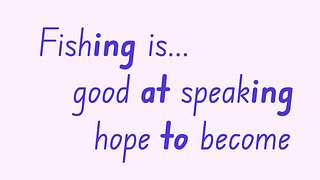
1. -ing form as the subject of a sentence We can use the -ing form of a verb as the subject of a sentence. In this case, the verb works like a noun. Examples: Playing outside is good for children. Reading in a foreign language can be difficult. 2. Preposition + -ing form After a preposition, we use the -ing form of the verb. Common prepositions: after, before, by, in, on, without, about, etc. Examples: After seeing the film, he cried. Before going to bed, he had a shower. She is good at speaking English. Key rule: If a verb comes after a preposition, it must be verb + -ing, not to + verb. 3. Verb + to + infinitive Some verbs are followed by to + base verb (the infinitive). Structure: verb + to + verb Examples: I hope to become a doctor. He decided to buy a new car. I'd like to go on holiday. She promised to help me. Common verbs followed by to + infinitive: agree choose decide expect help hope need promise seem want would like 4. Verb + -ing form Some verbs are followed by the -ing form, not to + verb. Structure: verb + -ing Examples: She enjoys playing tennis. They avoid travelling by bus. I miss seeing my friends. Common verbs followed by -ing: avoid don't mind enjoy finish imagine miss spend time stop
2

Choose the correct options to complete the sentences.

3

Use the correct form of the word in brackets to complete each sentence.

4

Find and correct the mistakes.

5

Write your sentences.

Other worksheets in this category