1. Will / Won’t (predictions based on opinion)
Use will / won’t when you make a prediction based on your opinion, belief, or general knowledge.
Structure:
subject + will / won’t + base verb
Examples:
I think the meeting will finish early.
She won’t like that decision.
2. Adverbs of probability with will
Use adverbs to show how certain you feel.
Common adverbs:
definitely (100%)
probably (high chance)
possibly (lower chance)
Structure:
subject + will + adverb + base verb
Examples:
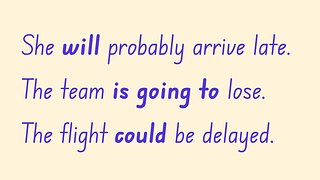
She will probably arrive late.
They will definitely win the contract.
Note:
With negatives, the adverb comes before won’t:
He probably won’t finish on time.
3. Be going to (predictions with evidence)
Use be going to when there is present evidence or a clear situation now.
Structure:
subject + be + going to + base verb
Examples:
Look at those clouds — it’s going to rain.
The team is going to lose — they’re playing very badly.
4. Be likely / unlikely / certain to (degrees of probability)
Use these structures to show how probable something is.
Structures:
be likely to + verb → probable
be unlikely to + verb → not probable
be certain to + verb → almost guaranteed
Examples:
The company is likely to expand next year.
He is unlikely to finish today.
The event is certain to attract many visitors.
5. Might / May / Could (possibility)
Use these modal verbs when something is possible but not certain.
Structure:
subject + might / may / could + base verb
Examples:
She might change her plans.
The flight could be delayed.
They may open a new office.
6. Be due to (scheduled or officially expected events)
Use be due to for events that are planned, scheduled, or officially expected.
Structure:
subject + be due to + base verb
Examples:
The train is due to arrive at 6:30.
The new policy is due to start next month.