Phrases to Refer to Certainty and Probability
ESL Grammar WorksheetsPhrases to Refer to Certainty and Probability

Phrases to Refer to Certainty and Probability

Help learners express certainty, probability, and expectation with this in-depth B2 grammar worksheet on certain / likely / due + to + infinitive. Students study clear explanations and examples, then practice through error correction, sentence rewriting, unscrambling, and guided writing tasks. Ideal for teens and adults, this worksheet builds accuracy and confidence when talking about predictions, schedules, and definite outcomes in real-life contexts. Perfect for classroom use or self-study.

Online Interactive
Based on CEFR
Fully Customizable
1

Study this grammar rule.

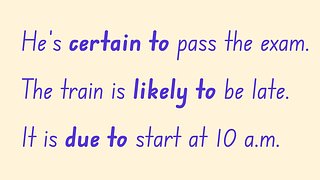
We use certain, likely, and due followed by to + base verb to talk about certainty, probability, or scheduled events. Certain + to + verb → expresses strong certainty He's certain to pass the exam. → It is definite that he will pass. Likely + to + verb → expresses probability The train is likely to be late. → It probably will be late, but it's not guaranteed. Due + to + verb → refers to scheduled or expected events When are they due to arrive? → When are they expected to arrive according to schedule? Key points: After these adjectives, we always use the infinitive (base verb + to). "Certain" = definite; "likely" = probable; "due" = expected / scheduled. Can be used for both people and things. Examples: She's certain to win the competition. The weather is likely to improve tomorrow. The meeting is due to start at 10 a.m.
2

Unscramble the words to make sentences.

3

Find and correct the mistakes.

4

Rewrite the sentences using the target structure.

5

Write your sentences.

Other worksheets in this category