1. Function: Linking Contrasting Ideas
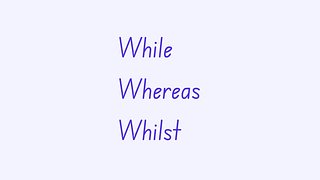
While, whereas, and whilst are conjunctions used to connect two clauses that show contrast. They highlight differences between ideas, people, situations, opinions, or facts.
Examples
- I prefer working alone, whereas my colleague enjoys teamwork.
- Whilst she loves spicy food, I prefer mild dishes.
- He enjoys city life, while his brother prefers the countryside.
2. Position in the Sentence
These conjunctions can appear at the beginning or in the middle of a sentence.
Beginning of the sentence
When the clause with the conjunction comes first, place a comma after it.
Example:
- Whilst she loves spicy food, I prefer mild dishes.
Middle of the sentence
When the conjunction connects two clauses in the middle, place a comma before the conjunction.
Example:
- I prefer working alone, whereas my colleague enjoys teamwork.
3. Register and Usage
While is neutral and common in both spoken and written English.
Whereas is usually more formal and often appears in academic or written contexts.
Whilst is also more formal and is especially common in British English.
4. Time vs Contrast
While and whilst can express two different meanings: time or contrast.
Time meaning (simultaneous actions)
- She was listening to music while doing her homework.
Contrast meaning (difference between ideas)
- She enjoys loud music, while I prefer quiet environments.
Whereas is used only to express contrast, not time.
5. Clause Structure
These conjunctions usually link two clauses.Examples:
- I enjoy winter sports, whereas my sister prefers summer activities.
- While I enjoy winter sports, my sister prefers summer activities.
6. Meaning Nuance
Whereas often signals a stronger or clearer contrast.
Example:
- She likes early mornings, whereas I prefer working late.
While and whilst often express a softer comparison or contrast.
Example:
- She likes early mornings, while I prefer working late.
Context usually helps readers understand whether while/whilst express time or contrast.