1. Verbs of Sensation
Verbs of sensation describe how something looks, sounds, tastes, smells, or feels.
Common verbs:
- look
- sound
- taste
- smell
- feel
Examples:
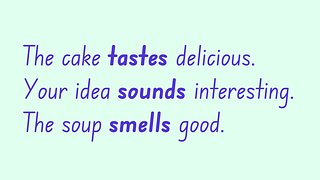
- The cake tastes delicious.
- Your idea sounds interesting.
- The soup smells good.
2. Adjectives After Verbs of Sensation
After verbs of sensation, we use an adjective, not an adverb.
Subject + verb of sensation + adjective
Examples:
- This tastes bad.
- It looks great.
- The flowers smell nice.
Correct:
- It smells nice.
Incorrect:
- It smells nicely.
3. Adjectives vs Adverbs
After most verbs, we use an adverb.
Example:
- He cooks badly.
After be and verbs of sensation, we use an adjective.
Examples:
- The food is bad.
- The food tastes bad.
4. State Verb Behavior
Verbs of sensation are usually state verbs, so they are not normally used in continuous tenses.
Correct:
- The soup tastes good.
Incorrect:
- The soup is tasting good.
Common exceptions
Feel can be used in continuous for emotions or temporary states.
- I’m feeling tired today.
Look can be used in continuous when it means to direct your eyes.
- What are you looking at?
5. Questions with Verbs of Sensation
We often ask questions about sensations using How or What … like.
Examples:
- How does it taste?
- What does it taste like?
Short answers often use an adjective.
- It’s delicious.
- It’s sweet.
6. Using like for Similarity
We use like + noun to describe similarity.
Examples:
- What does it taste like? → It tastes like chocolate.
- Who does she look like? → She looks like her sister.
7. What … like? with be
We also use What … like? with be to ask for descriptions.
Examples:
- What’s the weather like?
- What was the movie like?