Present Simple Be Versus Do in Questions
ESL Grammar WorksheetsPresent Simple Be Versus Do in Questions

Present Simple Be Versus Do in Questions

Improve A1 English grammar with this worksheet on Present Simple questions using “be” and “do.” Designed for teens and adults, it explains key differences, common mistakes, and correct structures. Includes gap-fill, error correction, sentence transformation, and speaking practice. Ideal for ESL learners building confidence in forming questions and negatives accurately. Perfect for classroom use, homework, or self-study.

Online Interactive
Based on CEFR
Fully Customizable
1

Study this grammar rule.

1. The Verb “Be” (am / is / are)

Rule:

“Be” does not need an auxiliary verb.

👍🏼

  1. I am happy.
  2. She is tired.

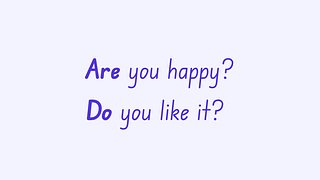
  1. Are you happy?
  2. Is he at home?

🙅🏽‍♀️

  1. I am not happy.
  2. They are not ready.


Do you are happy? → incorrect

Are you happy? → correct


2. The Verb “Do” (for actions)

Rule:

Use “do / does” as an auxiliary verb in questions and negatives with action verbs.

👍🏼

  1. I like it.
  2. She plays football.

  1. Do you like it?
  2. Does she play football?

🙅🏽‍♀️

  1. I do not like it.
  2. He does not work.


Like you it? → incorrect

Do you like it? → correct


3. Key Difference

Use “be” when it is the main verb. Do not use “do” in this case.

Use “do” when the main verb is an action verb.

Examples:

Are you tired?

Do you work here?

2

Fill in each gap with word(s) that you think are suitable.

3

Find and correct the mistakes.

4

Rewrite the following sentences into questions.

5

Answer the questions using the correct form of the verb.

Other worksheets in this category